
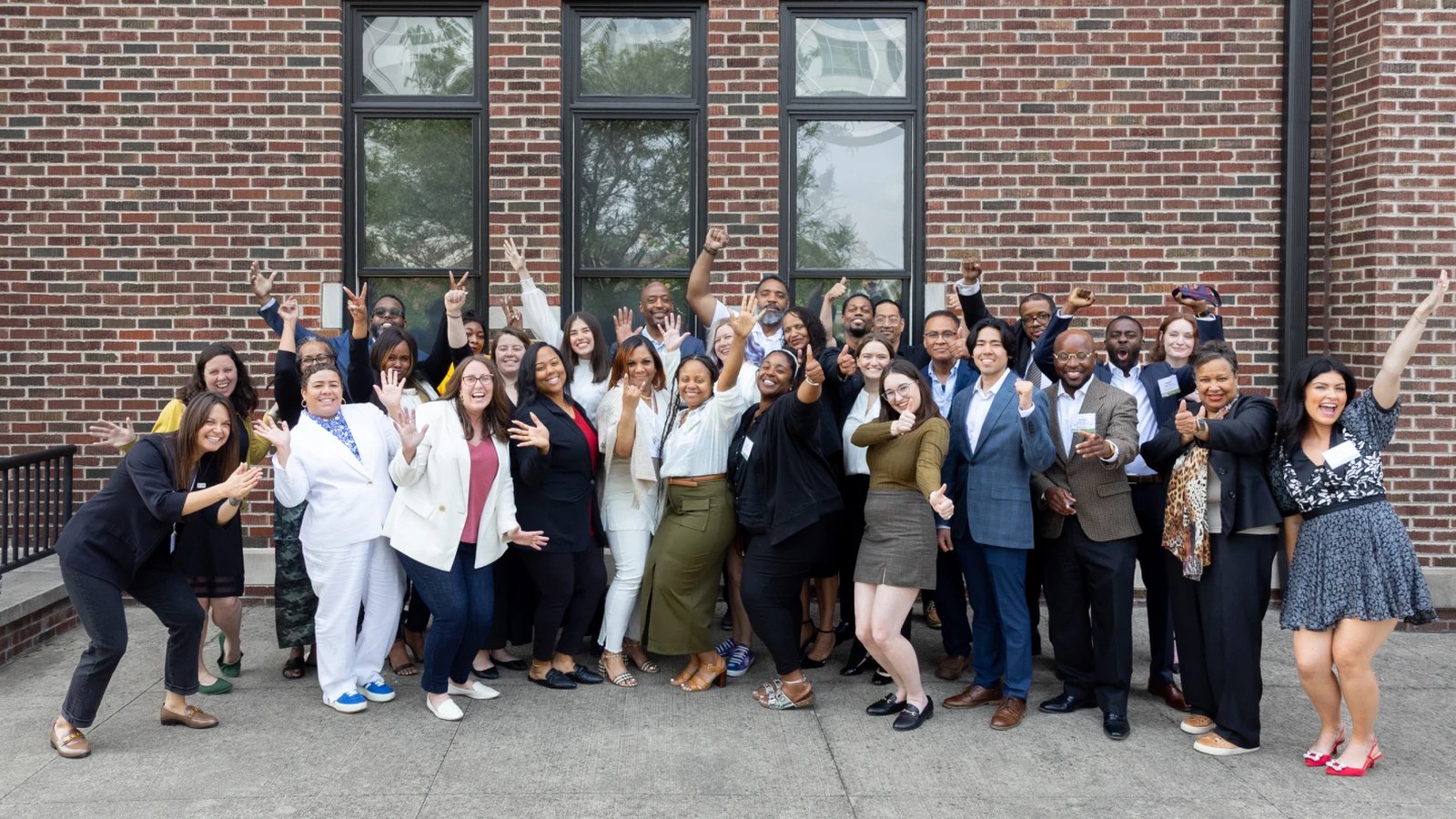
MVGeneral President and Co-Founder La-Tisha Pirtle is quoted twice in ULI’s Urban Land magazine, in a February feature on the Real Estate Diversity Initiative, the Urban Land Institute’s development training program for women and people of color.
She has a particular vantage point on it. She went through REDI as a scholar in the ULI Indiana cohort, served as co-chair of the 2025 class, and now chairs the Indiana program.
The Number the Program Exists to Change
The article opens with a figure from a Grove Impact study: Black and Hispanic real estate developers together make up less than 1 percent of all private developers in the country. Broken out, Black developers represent 0.40 percent of the commercial real estate industry and Hispanic developers represent 0.16 percent.
That is not a pipeline that narrows at the top. That is a pipeline that was never built.
REDI exists to change those numbers, and the article is clear that expanding access to the industry is only half of the goal. The other half is addressing the longer-term disparities in compensation and opportunity that persist for the people who do get in.
What REDI Actually Is
REDI started at ULI Colorado during the 2008 recession, in response to a growing recognition of the distance between women and people of color and the rest of the commercial real estate industry. Roughly eight years ago, funding from the Robert Wood Johnson Foundation helped the program scale. It now runs in 13 ULI District Councils nationwide.
In Indiana, it is a 15-week program. Scholars are selected competitively, and the curriculum walks step by step through the development process with instruction from ULI members who work in the field. Outside the classroom, scholars work in teams on a development proposal for a real local site, which is where the coursework stops being theoretical.
Graduates receive a ULI membership on completion. That membership is the part people underestimate. The training teaches the process, but the network is what lets someone actually use it.
What It Changed for Her

La-Tisha Pirtle, President and Co-Founder of MVGeneral Construction Services, co-chair of the 2025 REDI class and current Chair of the Indiana program.
La-Tisha’s first quote in the article is about capability, not credentials:
“The REDI training helps me walk developers, nonprofits and for-profit, through the full arc of development, from concept and site design to infrastructure, foundations, and vertical construction. I don’t know if I would have the confidence to do that without that training.”
La-Tisha Pirtle, President and Co-Founder, MVGeneral Construction Services
That is worth sitting with, because it describes a specific professional gap that REDI closed. Owner’s representation and construction management both require someone who can hold the entire arc of a project in view and explain it to an owner who is living it for the first time. That skill is learnable, but only if someone teaches it to you.
Her second quote speaks to what the credential does in the market:
“REDI is a very well-respected program in our market. Being a REDI scholar lends automatic credibility. It signals that you’ve completed rigorous, meaningful coursework, and that cachet is worth its weight in gold.”
Why This Shows Up in Our Work
REDI addresses the developer side of the industry. Most of what MVGeneral does sits one tier down the org chart, on the contractor side, where the same access problem takes a different shape.
A certified minority, women, veteran, or disadvantaged business enterprise does not usually fail to win work because it cannot do the work. It fails to win work because it heard about the bid too late to price it properly, or because it never heard about it at all, or because the participation number got reported after the buyout was already finished.
That is why our diverse procurement scope is structured the way it is. On the Crispus Attucks High School expansion, our XBE procurement work means identifying qualified firms, getting them to the bid table with enough lead time to price the work seriously, and tracking participation through construction rather than reporting it at the end. Our community outreach events exist so that local and diverse contractors learn what is coming up for bid while there is still time to compete for it.
Different tier, same problem. REDI works on who gets to develop. We work on who gets to build. Both of them are questions about who found out in time.
If You Are Considering It
An Indiana cohort is in session right now and graduates next month. ULI Indiana runs the program annually and accepts applications from women and people of color with experience in development or an allied field, including architecture, urban planning, brokerage, and construction. Program details and application materials are on the ULI Indiana site.
If you are weighing whether it is worth the fifteen weeks, La-Tisha is a reasonable person to ask.
Read the full article at Urban Land.
MVGeneral Construction Services provides owner’s representation, construction management, general contracting, and diverse procurement consulting across Indiana. Contact us to talk about your project.